Recently, I’ve been listening to a lot more music, bringing the ratio of music-to-podcast back to a healthy 50%.
I needed something to work along to, and since re-reading this article, I figured, why not listen to something hard, heavy and filthy: Skrillex. Beats1 has actually given Skrillex his own show, called “OWSLA Radio”, after his own label. So I caught up on recent episodes here on Mixcloud:
At some point in this sixth episode, Skrillex & co started shouting someone’s name: “Bibiii”. This part of the episode kinda stayed with me. So, earlier today, when I browsed through I-D’s website and saw a video feature about the lady in question, I decided to check it out.
Turns out that Bibi is actually a songwriter who’s written Rihanna’s “Bitch Better Have My Money”. And one of the background tracks in the video is from her. Something I had heard before but hadn’t had the chance to identify the singer at the time. I started listening to her on Spotify. She’s actually released her debut EP “Free The Real (Pt. #1)”today!
So then, I started adding Jon Bellion to my Spotify Listening Queue. I’ve been a fan of his for a couple of years now and can’t wait for his first studio album (“The Human Condition” —out June 10th.) I really like Jon’s style, and have so much respect for him because he’s able to write, sing, produce and record all on his own. He’s just ridiculously talented.
And then I looked over on Hypebeast Music, one of my favourite websites to keep up with music, only to realise that 3 albums that I expected had dropped.
and on a more gangsta-related note, Skepta’s latest album “Konnichiwa”
Kaytranada
This album is SO GOOD! Kaytra is an incredibly talented beat maker and producer based out of Montreal. I’ve discovered him via Soulection’s iconic radio shows and I was so excited about his debut LP. And the man delivered!
This is a great album that will get you to jump, dance, vibe, and enjoy! And a possibly the album to play all summer long!
Like his previous albums, James Blake delivered a very ambiant and melancholic album. I love this type of music and this really did it for me. I feel like it’s gonna be on repeat all autumn/winter-long. It’s the kind of music you listen to on repeat on a rainy day, when the sky is grey and your mood is clearly meh.
But just like everything Blake touches, it’s really well produced. And I’ve absolutely loved “I need Forest Fire”, featuring… BON IVER (!!!)
At 17 tracks for a total of 76mn, it’s a long one, but definitely worth your while.
And finally, the return of the king of grime. I’m not too familiar with grime or with Skepta in general, but there’s been a lot of hype for this album, and around Skepta and grime in general, so it was very interesting for me to indulge in this artist’s world.
Since the announcement of Prince’s passing, I’ve finally taken the time to educate myself and listen to his music, trying to learn from the different records he’s put out over the past 40 years.
Prince was an artist who’s transcended music: he was moving across other arts, has influenced the world of fashion, and was so influential that he’s amongst the handful of human beings that have done more for the acceptance of others, regardless of their identities, gender and sexuality, than most politicians, regulators, or even artists.
But coming back to the music, I was impressed to learn that he simply knew everything about music: creating and playing, of course, but also all of the technical aspects that go into making and publishing a record. Legend has it that he showed up to a Music Studio as a teenage musician, and impressed the owner so much that the latter gave him a job working some of the machines (remember this is the 80’s, we take it for granted that one could potentially create, produce and release an entire album from a computer or an iPad nowadays.)
I’ve done a lot of reading over the past week or so, adding articles from the New York Times, Pitchfork, the New Yorker, Rolling Stones, The Atlantic, and many others, on to my Instapaper queue. However the piece that’s actually done the best job at explaining who Prince was as an artist was probably the personal one written by Michael Oates-Palmer for Vox.com
I remember being again stunned by his guitar playing. He was so good at everything else — singing, songwriting, dancing, being his crazy self — that we so rarely talk about how phenomenal a guitar player he was.
That second part of the quote also hits the spot:
Think of that: probably the fourth skill in his toolbox, and he was one of the 10 greatest guitar players of all time. One of the only ones of the last 30 years where even if you hear just three-seconds of a lick, you instantly know it's him.
Properly listening and discovering Prince, I’ve come to realise that what I had in mind when thinking of “crazy 80’s guitar solo” was actually Prince. 80’s trademark sounds: Prince. Some of the biggest hits in the history of pop music? Yep: Prince too!
Between the deaths of Prince and David Bowie, 2016 has left a giant gap by taking away two seemingly immortal legends responsible for some of the best party anthems we’ve ever heard, at a time when the love and partying would be much appreciated. Like Bowie, Prince will be sorely missed, however I’m grateful to live in a day an age where it’s so easy to discover so much about these artists. Time to educate myself.
As someone who’s working a lot in Customer Support, I have a handful of industry-resources I’m pretty open to read and catch-up on trends, etc…
In the latest email from We Support NYC, I came across this link, comparing average industry salaries.
Before I dive in, keep in mind that I’m technically a freelancer, contractor working remotely for a US-based company. I’ve worked in the industry since 2011, so I technically have 5 years behind me.
As pointed out by the post itself:
5 interesting facts about compensations in support
The median annual salary raise is 7%.
Your salary will increase by $10,000 raise after 3 years in support.
The gender inequality is still there. Women are paid 5.8% less than men.
Support people in the US make 40% more than in Western Europe
Working remote or having a technical background doesn't impact your salary.
Now, when I look at this number, considering the amount of work I undertake and other different factors I take into account. What's sad is that it doesn't there's a difference of about $20k going against me, compared with industry standards.
The golden rule of freelancing is that you should technically earn more than someone on a full-time job (about 20% or so I’ve heard), since you technically have more risks and taxes to balance with your work and professional services.
So I’m actually way under the standard, which bugs me a bit. Not so much the whole “comparing with others”, but more so knowing that I could earn so much more than I do now and that this higher income would help me move to a less risky situation.
Though I’ve been aware of this for a while and have already set in motion a few things that should help me. More on that really soon!
This new Kindle looks great! I’m part of the minority of people loving this new slim industrial design. But at $289/289€/£269 , this is way too expansive to upgrade from my 2015 Kindle Paperwhite.
You may have to disable your ad-block since they use proprietary players or their videos… (0_o').
Oh, and if you’re using the Ghostery plugin, to protect yourself from third-party advertising services, data-mining, and just for your privacy, you’ll have to temporarily deactivateRich Relevance, reload, and then Kaltura.
One of the most frequent yet hardest questions I’m asked these days is “What do you do?”
Since the beginning of the year, I’ve been asked this question more times than I can count, and every time, have given a different answer.
See, it’s very hard for me to answer this simple question. Am I a developer? No, but I can code. Am I a designer? Not at all, although I know how to use Graphic Design applications well enough to accommodate myself. Am I a web designer then? Not really, although I’ve been creating websites for clients. A (digital) marketer, maybe, then? Well, not really, and yet I’m all these things at once.
This is always a loaded question, and it’s harder to answer with relatives and people who don’t understand the web, or our industry. Because I’m hungry and I’ve got the attention span of a magpie, and since I’ve started freelancing in June 2015, I’ve worked on different projects.
Sure, as of writing these lines, I’m very much involved with my One Big Client, however, I’m also trying to take on more work on the side, that I manage over my weeknights and weekends, to complete my income and most of all, ensure that I don’t rely on a single client.
It’s been challenging, but it’s also allowed me to optimise the way I work to the point where I’ve found the time to launch twopodcasts.
And circling back, it’s enabling me to live in this place I come from, the French Riviera, and work on other paid projects.
In concrete terms: I’ve been paid to handle a brand’s social media presence, I’ve been paid to write blog posts, I’ve been paid to create a website, I’ve been paid to help acquire new customers for a B2B company, and many other projects.
So what do I do? Well it depends: what do you need me to do, for you?
Apple won’t become boring with age. The company is just as exciting — and occasionally as unexpected — as they were 40 years ago. Of course, I owe Apple an unending debt: This is the company that made my life exciting, rewarding, and brought me to Silicon Valley.
A great note worth your time, from the man who almost became Apple’s CEO back in the 80’s. In his article, Mr Gassée reflects on his time at the company, and extends the reflection to the company itself.
During this single episode — which really only spans a single night — Marnie grows more as a person and a character than she did in any of Girls' past seasons.
HBO’s Girls has produced another great episode that goes in depth with one of its most quiet characters.
My point here is that this show puts on characters that are both relatable, and yet incredibly self-destructing. So while it’s definitely worth watching to get an understanding of the millennial generation’s struggles and state of mind, I know for a fact that it does not reflect my personal life.
The characters, while being portrayed accurately, tend to be naive and go over the top as opposed to being realistic and rational. And while I know some of my peers can make the same mistakes, I also know that I myself, as well as many other friends, relatives, and people that I know, do not behave the same way.
Still, this episode was worth seeing, and this article worth reading!
Somehow it is possible if you brave it.
So if you possibly can, please start your own thing. Seek support and build your confidence from friends and great organisations like She Says, Ada’s List, the Female Entrepreneurs Association and the British Institute of Women Entrepreneurs.
In other words, Never give up on your projects, on what makes your heart ticks, and launch something that will put a dent in the universe! For women, but also for anyone else feeling frustrated
Hello and Welcome to a new episode of the [Digital Digest](http://digest.digital) podcast!
This is the third episode, and today, I'm chatting with Paul Papadimitriou, who goes by the title of Innovation Scout. We're going to chat about his childhood and international background, discuss around the topic of Identity, and look into his career as an international consultant working with organisations all around the world.
There's plenty to unpack here, so without further adue: enjoy this new episode of the Digital Digest Podcast!
[mixcloud www.mixcloud.com/tibz/digi… width=100% height=400 autoplay=1]
It’s been really fun to chat with Paul, and it was an absolute breeze to record this interview. He’s a well-traveled, curious man, and I’m very grateful that he shared so much about his life, his work, and his diverse career and travels. Hearing his tales of working with different businesses and organisations around the world is not just a consultant’s dream, but a personal aspiration of mine, and having someone of his caliber on my tiny little podcast was absolutely humbling.
Thanks again for listening, and I eagerly await to hear back from you, my dear listener!
Finally, if you’d like to help — I’ve enabled donations on the podcast’s page. Donating a small amount of money helps me make up for the hosting costs, and if I manage to get beyond the costs, I’ll may be able to record more frequently too (twice a month? Hallelujah!)
Each donation is a unique and will not be a recurring payment every month: it’s a one time only kinda thing. Although if you wish to donate more, I’d be even more grateful :
While we believe the FBI’s intentions are good, it would be wrong for the government to force us to build a backdoor into our products. And ultimately, we fear that this demand would undermine the very freedoms and liberty our government is meant to protect.
The Tech industry at large has sent clear explanations to governments about the risks of creating “backdoor access”.
Last Week Tonight with John Oliver has turned into one of my favourite shows to watch on a weekly basis. Debunking insane policies of the US government, calling out corporate companies and lobbyists or putting Donald Trump in check.
His latest segment is a mandatory watch on the Encryption debate going on, with Apple and the San Bernardino’s shooter’s iPhone at its core:
I’m not a fan of fast-fashion, however, one has to salute the latest collaboration between H&M and… Caitlyn Jenner! Not only does the collection look pretty good, it’s also a great way to help mentalities evolve for the better around the acceptance of the LGBT community.
Being a Frank Ocean fan in 2016 is not about being frustrated; it’s about being a frustration meme. Have you expressed your annoyance that he hasn’t released anything new yet? If not, are you really a fan? Waiting for Frank Ocean has become the new listening to Frank Ocean.
The true life and real sadness of being a Frank Ocean fan!
Natalie Lloyd is a digital strategist and a director at MOHARA, an agency based in Brighton, England. She’s also a close friend of mine.
In this episode, we’re chatting about her background in commercial photography, working from New York to the South of France, running a TEDx event, and… diversity.
So, over the next few months, if you pay attention to the trades, you'll see Hollywood misunderstanding the lesson they should be learning with Deadpool. They'll be green lighting films "like Deadpool" - but, by that, they won't mean "good and original" but "a raunchy superhero film" or "it breaks the fourth wall." They'll treat you like you're stupid, which is the one thing Deadpool didn't do.
James Gunn, director of the phenomenal Guardians of the Galaxy, is spot-on! And this is guaranteed!
In the first episode of the new Digital Digest podcast, I’m chatting with my friend Geet Khosla about growing in India, being part of the family business at age 12, launching & selling your company, working with family, and much more…
The Taken King works surprisingly well as a single-player game — especially if you have a few friends playing once or twice a week who don’t mind running quests again and keeping their mouths shut about what happens next. I didn’t rush to figure out how
I absolutely agree: my PSN Friends are either way ahead or don’t even play Destiny so I’m on my own most of the time and it just works. Really freaking well!
It’s not exactly the most serious game, but it’s very enjoyable to give it a bit of time throughout the week to slowly, but surely, improve your character.
That’s also how I felt playing through Diablo at my own pace, binging every couple of weeks/months or so.
Back in 2015, I wanted to experiment with audio and with podcasts. I started recording podcasts on my own time, focusing on the tech news cycle. Very soon I was spending a few hours per week recording and editing up to 23 episodes on a weekly basis. Then I decided to go on a hiatus. This coincided with a new job I’ve started, and then by moving abroad, leaving England (and Brighton) for good.
However during this time, my community of listeners grew, I stayed losing my focus and becoming aware of different problems and shortcomings. Amongst which were these :
**The tech news cycle is too fast. ** Adjusting to the news and taking the time to explain it was my primary focus, but in reality I couldn't dedicate enough time and as a one man band, I spent several hours recording a single 10mn episode.
I want to go more in depth with the variety of topics we discuss. And go beyond the news.
And perhaps more importantly, I want to interact with other interesting individuals. See, my passion is in the people, more than the pixels. Ever had an in-depth conversation with someone and wanted to share it with those around you? Well that's what I'd like to try and recreate.
So here goes Digital Digest 2.0. I’d like to make sure the episodes are longer and possibly free flowing. I also want to experiment with a quick word before, after, and possibly during the interviews. And I want to showcase people that you may not have heard of before. And in order to do that I’m thinking about publishing one episode a month, to give me the time to offer a teaser/preview, and thank potential sponsors and prepare the next episodes.
So hang tight for the first episode coming out very soon! In the meantime if you have any question or suggestion, I’d love for you to get in touch!
Mailbox, the app that single-handedly revolutionized emails & productivity apps on mobile, is being shut down by its parent, Dropbox. They’re also shutting down Carousel, the excellent but under-used photo management app. Carousel’s core focus around photos will stay inherent to Dropbox, although features such as Flashback and Shared Albumswill not make it to Dropbox.
Beyond the news of the service shutting down are a few things worth noting. First of all, this was discussed a few months ago, when pundits & VC started talking about the death of a few unicorns, and companies starting to consolidate. The biggest targets at the time seemed to be Dropbox & Evernote.
“Apps that get acquired don’t last. Apps that don’t get acquired also don’t last. (Exceptions are rare.)”
This is a worrying trend for the world of app development, and especially indie developers. At this point in time, and without Apple’s help, it is simply impossible to create an independent and sustainable business developing apps. The alternative: working for clients, or branching out to take your focus away from apps and trying your luck building freemium games, or desktop apps. Even leaving your values at the door and adding mobile ads won’t be enough to help you play the long game.
Developers on the iOS & Mac App Store have asked for PaidUpgrades for years, and until Apple decides to help its developers, the situation will only get worse. Customers already feel icky about paying for an app, even for a price as low as ranging from $0.99 to $2.99, and a later option to monetise is about the only way to ensure an app’s development. So far, Apple’s stance has always been that third-party developers were working for them, as opposed to working with them.
If independent developers continue to be squeezed out, soon there won’t be a lot of these businesses left, and all customers will be left with will be productivity apps from the 3-4 biggest companies, and free applications developed by big brands who have other ways to monetize, thus rendering the mobile apps & games as mere branded advertising opportunities.
That said, Mailbox is now on a long list of smaller projects swallowed up by big companies just to be shut down later. That's always rough to see.
Mailbox (and Carousel) join a long list of acquired services being swallowed and discontinued. As noted in online comments, this is the type of behaviour one would expect from Google, Apple or Microsoft, not Dropbox.
The future is looking more incertain by the day, and there are no easy answers at the moment. What’s sure is that we are far from the gold rush of the first 4-5 years of the App Store when developers could offer an innovative product for a fee, and make a good return worth the work they’d spend months investing into.
In the meantime, if you’re looking for an alternive to Mailbox, be sure to check out Spark, an excellent email client on iOS by Readdle, one of the few remaining indie developers out there!
Customer support can make or break small businesses, and has a powerful impact on the outcome, successful or not, experienced by younger companies: every praise matters, and any customer with a high enough number of followers can help shine the spotlight on your product. However, this is a double-edged sword that can work against you, when vocal dissatisfied end-users ruin your latest product launch with just a few tweets.
Most businesses haven’t yet realised the opportunity that lies in developing a friendly proactive support team. A great customer experience is worth your time & effort, and this starts by making sure your staff is motivated to give great support.
Customer Support can differentiate between a good product and a great company
OK, so how do I offer great support?
It’s simple really: beyond the simple idea that they want their problems fixed, customers want you to meet their expectations: so start by caring deeply about your customers, and listen to their problems. If you pay attention to your end-users and how they use your product, you can better understand their problems.
And it’s likely that they will realise the amount of effort you put into helping them.
Chances are, they may even feel grateful that you’ve taken them seriously, and you could turn a bad situation (i.e. experiencing a bug) into a positive outcome (i.e. Turn the customer into a fan, or even an ambassador for your product), simply by paying attention to them and being open, honest, and transparent about their request.
Are they experiencing a known bug? Then, explain to them that this is a known issue, that you’re expecting a bugfix to go out soon (feel free to share a rough ETA), and if possible, provide them with a temporary alternative.
Are your customers experiencing a new problem that your support team hasn’t seen, yet? Then try to give very simple & clear steps to help them gather log files, screenshots, and as many details as possible so that you can then investigate what’s going on. Again, be transparent with your customers and try to give them an ETA or offer an alternative, if you can. And make sure to follow-up with them once you have a solution.
Is that it?
It’s a simple thing, but paying attention and listening closely to your users can get you far, whether you’re acknowledging a feature request or trying to fix a problem with your product. It’s the difference between a company & product that they use, and one that they feel they share a bond with.
If your company, through your support agents, is able to show empathy, be reasonable, and make some honest efforts with your end-users, you will start reaping the benefits. This will start with better, more educated customers, friendlier conversations with your existing & potential end-users, and an overall better mood across your team, when dealing with support queries. I wouldn’t be surprised if you started seeing your customers be more vocal and open about sharing the good word about you.
I’ve bought my first Kindle back in 2011, during my internship in San Francisco. I knew I wanted to get back into reading and the advances of eInk as well as the convenience of being to carry hundreds of books in such a small device made it incredibly attractive for me.
I’ve been really happy with my Kindle 3G - the last generation sporting the physical keyboard. It’s travelled with me from the US, back to Europe, and all around the world (from sandy beaches in the Caribbean, to family trips through France, and beyond.)
Recently, I’ve noticed that after 4-5 years, the e-ink started fading away, and the device got slower. So I’ve had my eyes on the latest Paperwhite and Voyage for a while. Last year, when Amazon updated their Kindles I got a strong itch to upgrade. However, as my former colleagues at Realmac got theirs, I managed to hold off.
I’ve got a long list of books to read: fiction, non-fiction, business, self-help, and I’m also excited about the idea of connecting the articles I’ve saved from Pocket, and send them to my new dedicated e-Ink device.
We’re technologists, gadget geeks, and we tend upgrade our gear regularly. For some of the most hardcore of us, it’s a yearly iPhone upgrade. Me? I try to stay a bit more moderate and upgrade when I feel it’s a bit more needed or when I’ve really got a lot of value out of my prized possession. Not on a yearly basis, but every few years when it’s more justifiable. The new Kindle is definitely a (very) nice to have over a need to have, but the devices are not really that expensive anymore and I know it’ll be put to good use.
So long Kindle! You’ve been a great friend: now it’s time to make space to the new addition to the family!
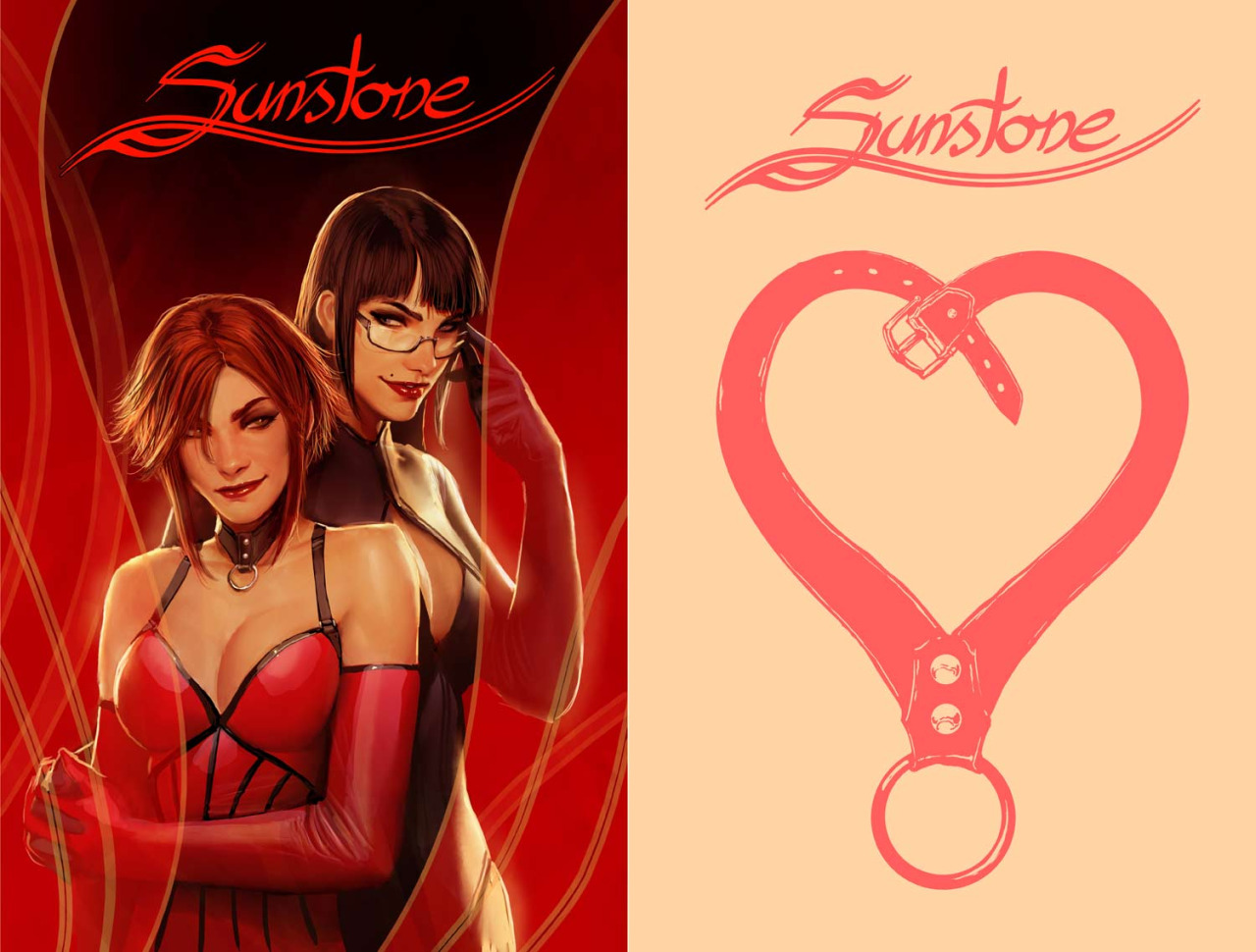
A few months ago, I was browsing Reddit and Tumblr when I saw a comic book kept popping up repeatedly: “Sunstone”.
The name somehow stayed in the back of my mind (as someone for whom English is not my native language, I had never heard of the word sunstone before.) Until last week, when Comixology ran a special promotional sale, ahead of the release of the second volume of Sunstone (which came out today, by the way.) As part of this sale, the first volume was discounted: it was the perfect time for me to pick it up and give it a try.
The book is aimed at adults, and is about two women meeting in a chatroom, getting to know one another, and entering a relationship through their common attraction to BDSM. Now, I know what you’re thinking, and you have to understand that this shouldn’t be considered a pornographic book. Where the book shines is by really diving deep into the protagonists background and psychology: these are fully developed three-dimensional characters who bring their share of experience, and at the end of the day, you keep reading these pages trying to learn more about their paths. In a single book, I’ve felt a genuine curiosity towards the stories of these characters and felt compelled to learn what would happen next. Over the first few pages, I’ve already felt like some of the characters traits were reflections of my own personality.
In the past week, I’ve not only read this book from cover to cover, I’ve also taken the time to educate myself on the story behind the creation of the book, the artist, and also read the other finished chapters, available online for free and should be published very soon.
There’s an interesting backstory to how the book came to be: Šejić started drawing a series of sketches and illustrations on his spare-time, as a way to take a break from his busy schedule as a comic book artist. Overtime, he continued to draw these two protagonists in different poses and situations, to the point where he naturally started working on stories between them. He published them online on DeviantArt, under the alias “Shiniez”. Overtime, the web comic became incredibly popular (reaching with millions of views) and the creator was offered a publishing deal to turn the free online comic into a physical version.
Although this is indeed a true independent success story, there is something absolutely unique about this book: it’s no coincidence that it’s such a popular indie title. First of all, starting with the obvious: the art is just beautiful! As I’ve mentioned before, the creator has done some great work on big titles in the past and whether you read it for free from his DeviantArt account, or via the slightly more polished print version, Sunstone is a visual treat on the eyes.
What really shines, however, is the details given to the characters' traits and personalities as well as the attention and respect towards the BDSM community. I’m not into this type of fetish in any way and used to think about it in slightly stereotypical ways… until I started reading Sunstone. This book really respects these practises and takes the time to explain the psychology behind dominance, submission and the whole alternative lifestyle that is the BDSM scene. It’s an exercise in openness and empathy, and the addition of different “vanilla” characters in later chapters help introduce inexperienced readers to this world even more. In addition, there is a lot of humor throughout the book, and the pace is really well balanced. There aren’t any pages during which I got bored or wanted to skip ahead to a different setting or situation. No matter where Šejić takes the story, there is always something interesting on the page.
So here we are: I’ve ordered a physical version of this first volume, as a gift for my girlfriend. I can’t wait to see her reaction after reading the book, so we can talk about these characters together. I would highly recommend anyone (above 18 years old) to check out Sunstone.
If you’d like to read more about the creator and his work on the book, you should definitely read this cross interview between him & his wife.
If you have read Sunstone, I’d love to know what you thought, and what attracted you to the book. And if you have any question on the book, I’d be happy to get in touch with you.
I haven’t yet had time to look at what happened during the latest democratic debate, but this video put a smile on my face. A great way to start the weekend.
“...you know what New York is? It's a place built by the backbreaking work of immigrants. Immigrants like your family, Ted Cruz. And when you say having New York values is a bad thing, you insult my city, my state, my culture, and my heritage. I am the son of an immigrant — and I am proud of it.”
“Mr. Trump, you wouldn't know New York values if they were written in 50-foot gold letters on the side of the Empire State Building. ”